

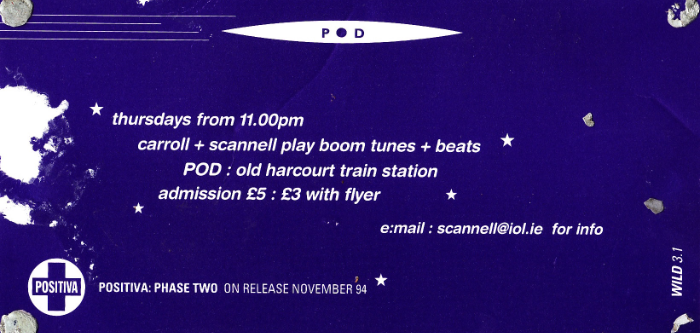
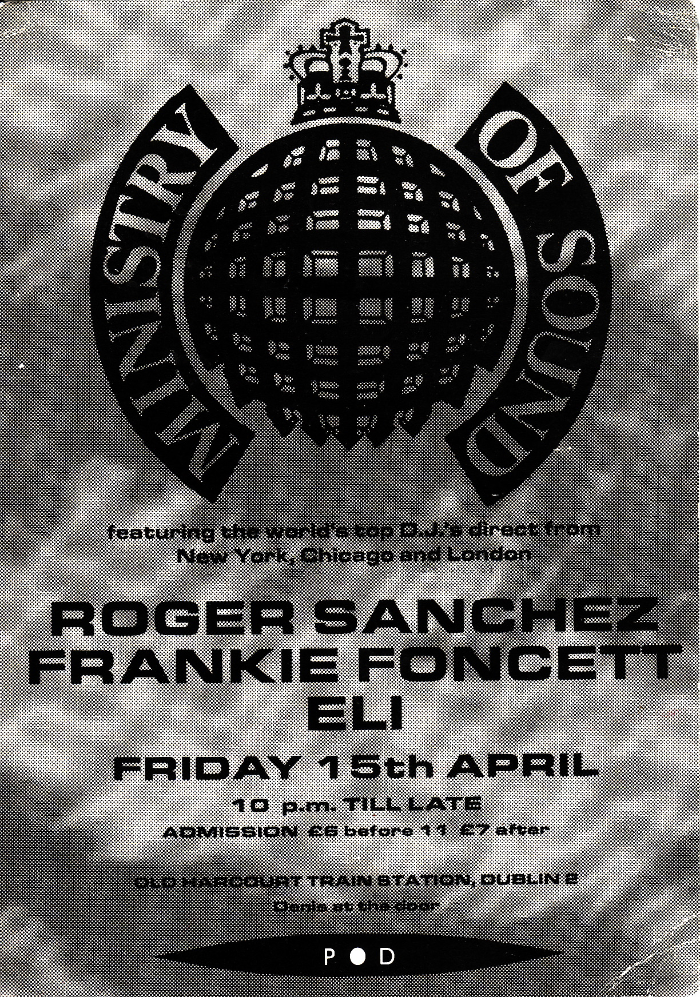
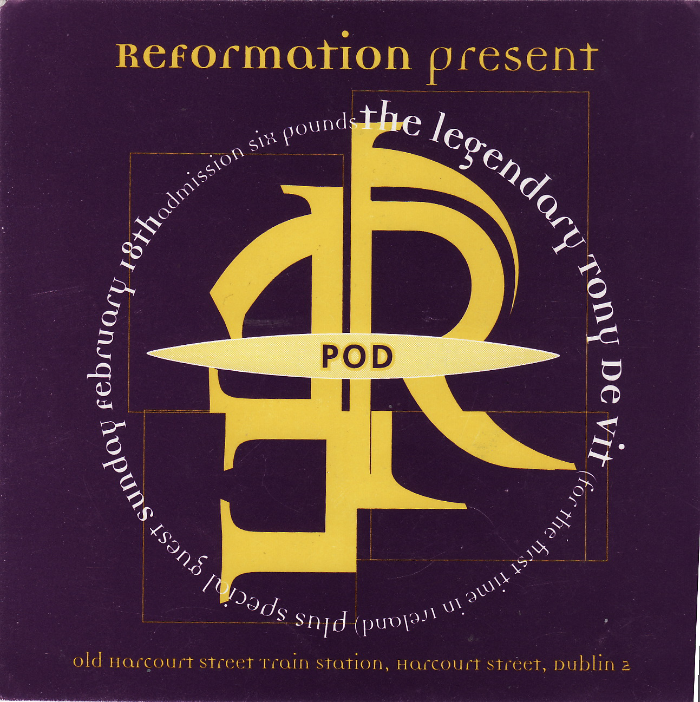
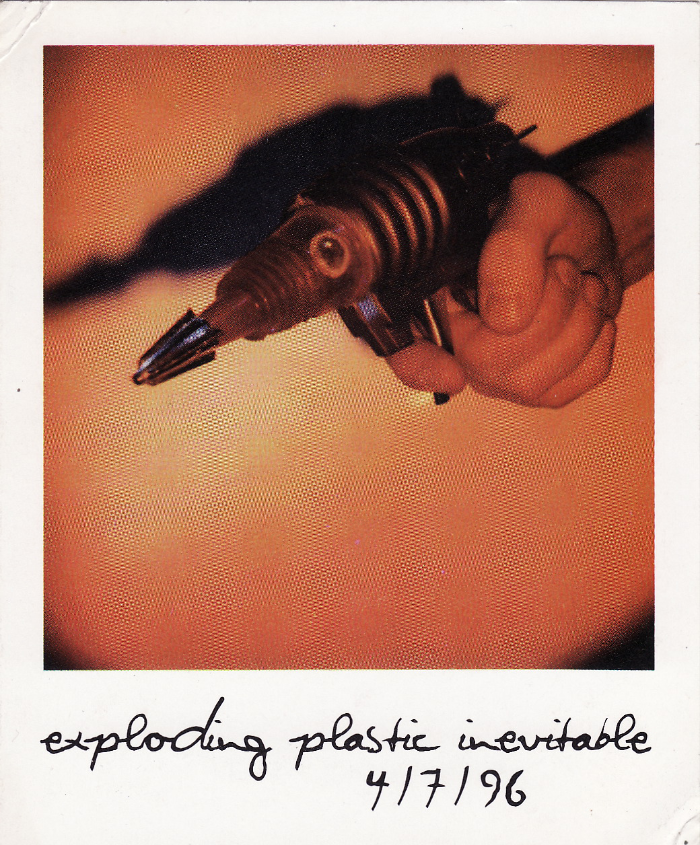
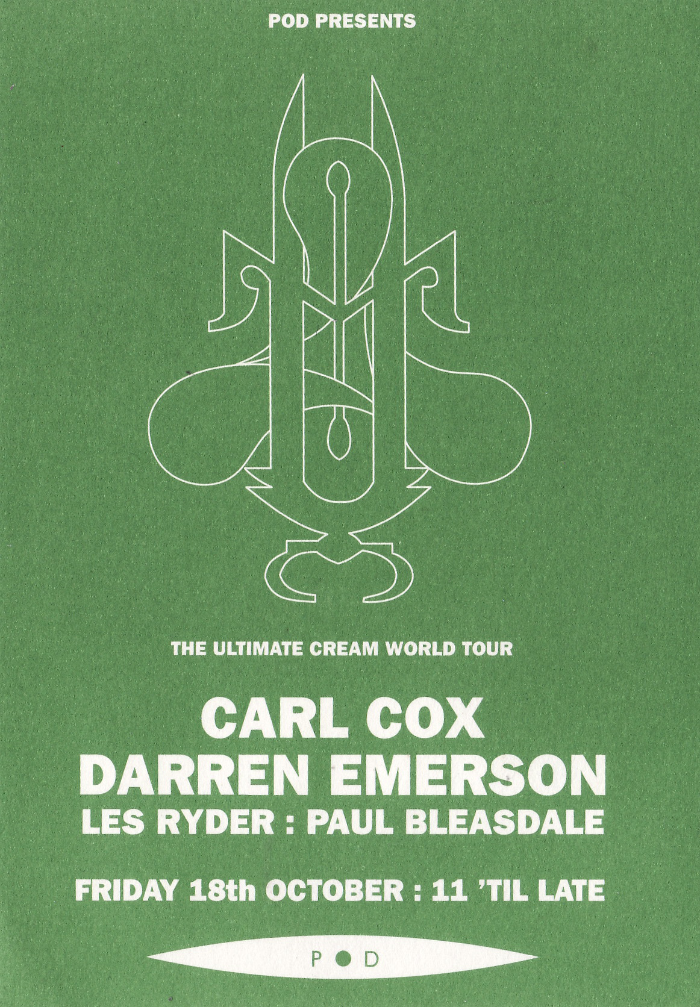
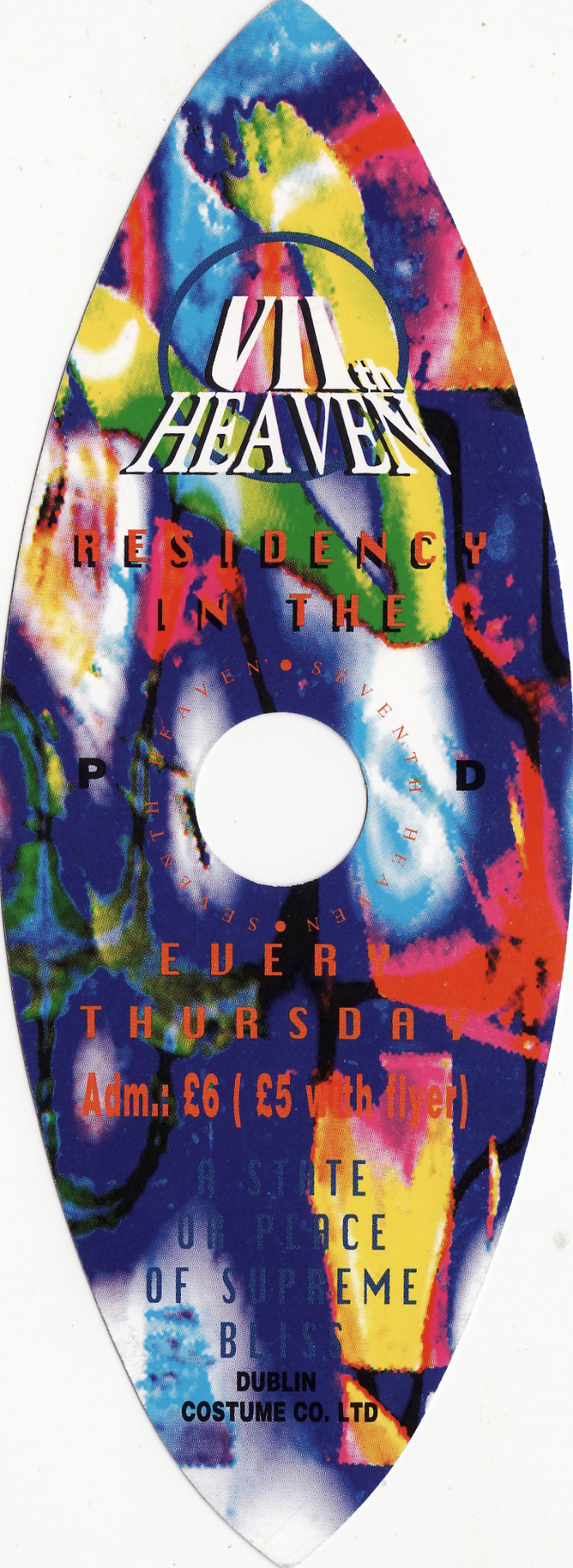
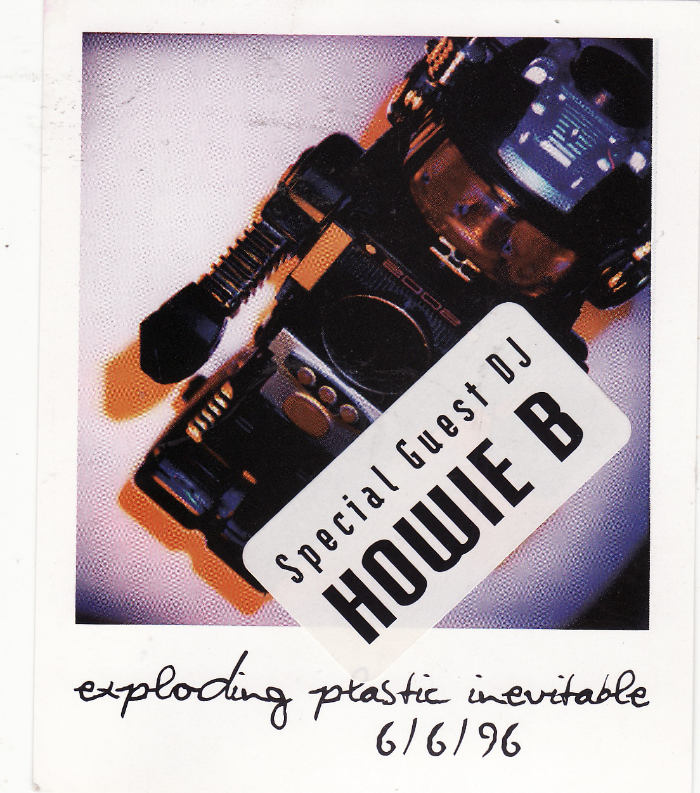
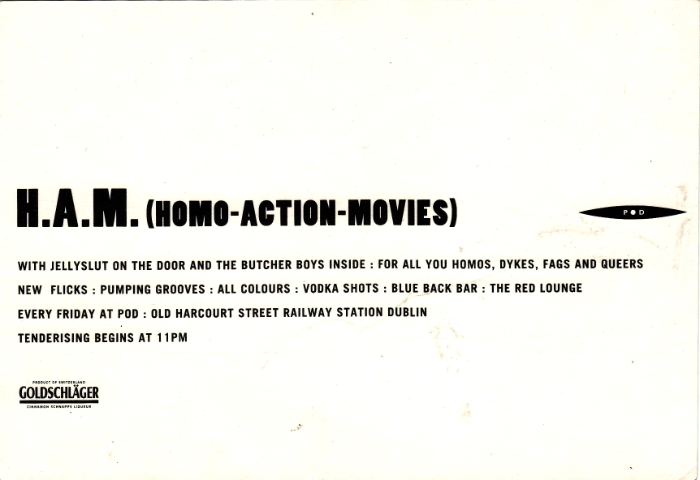
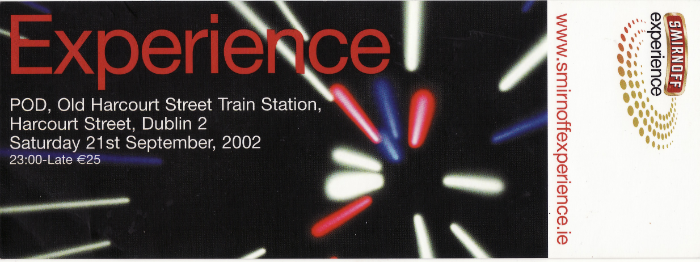
FLYERS
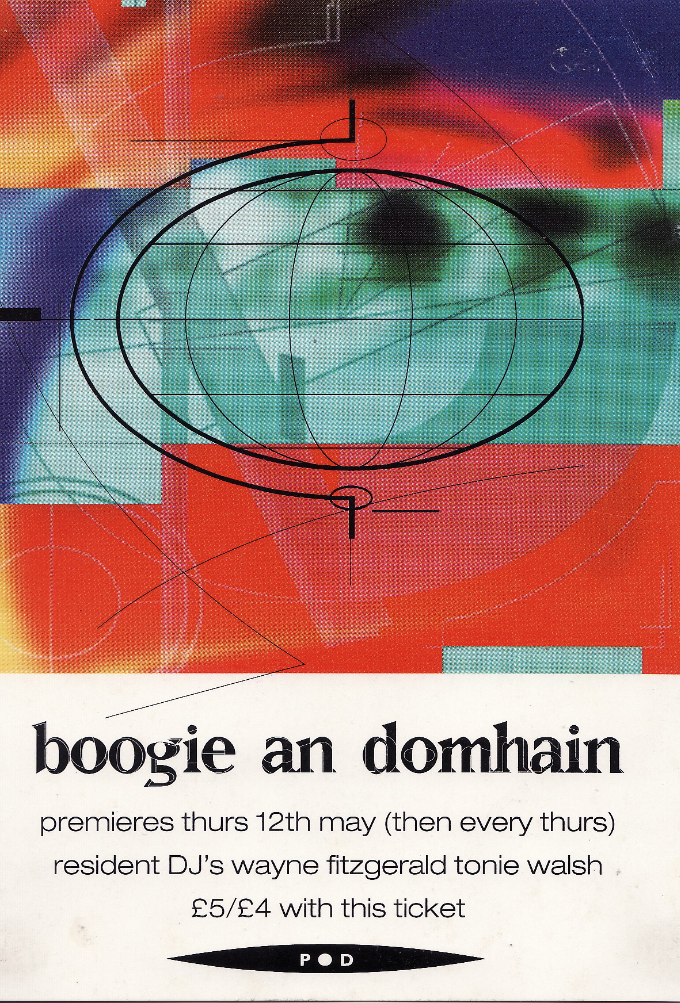
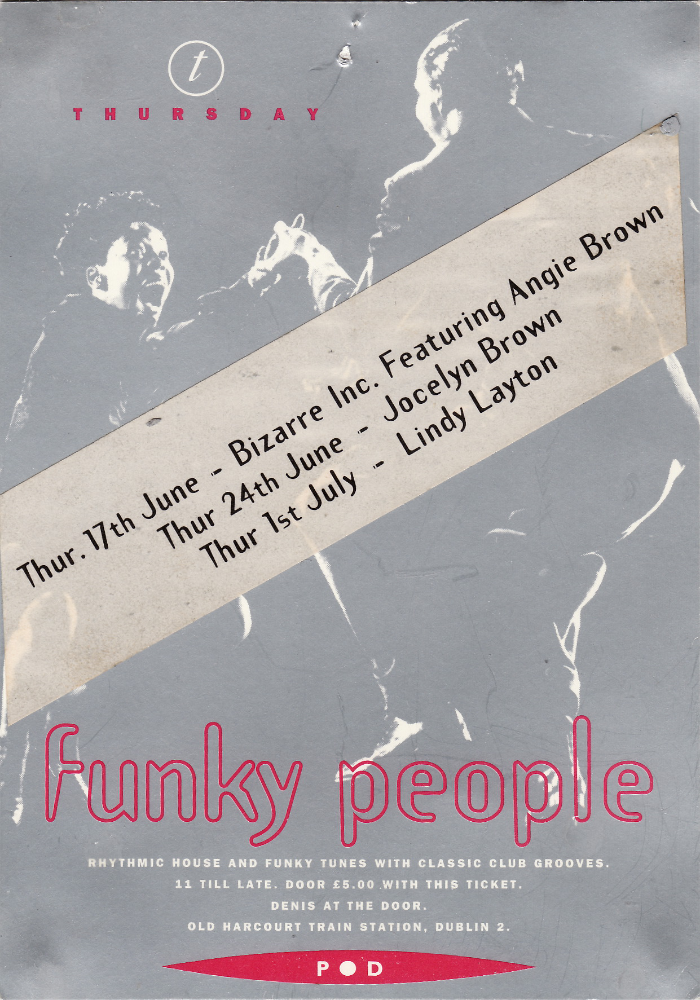
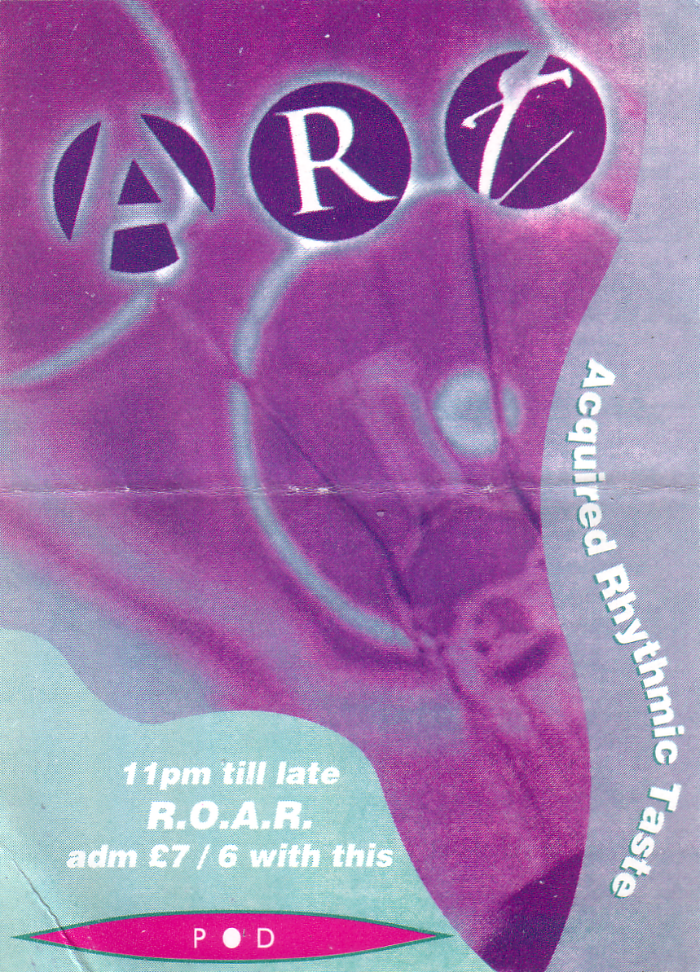
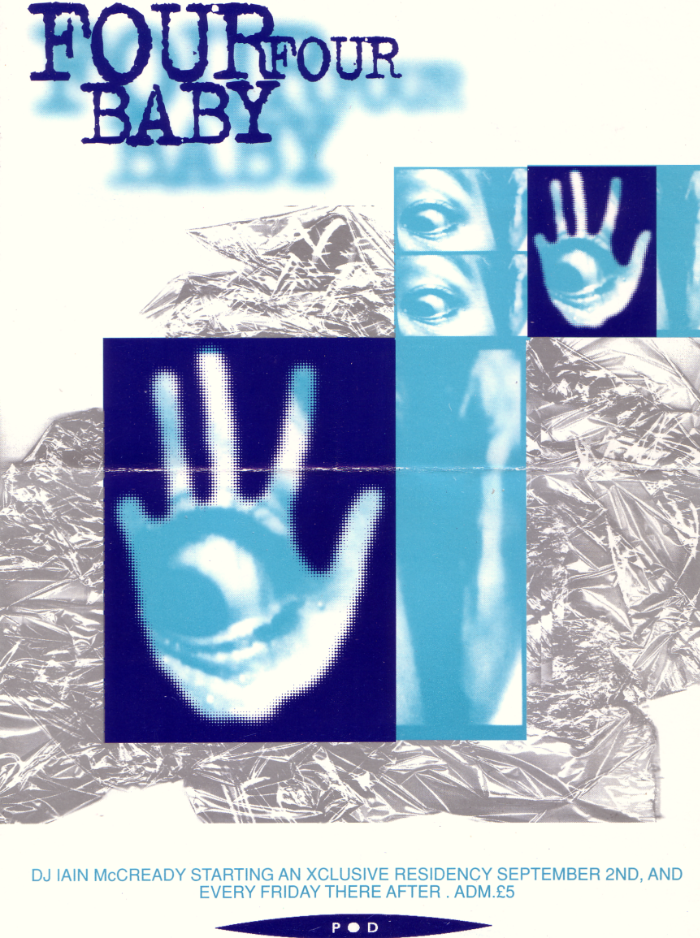
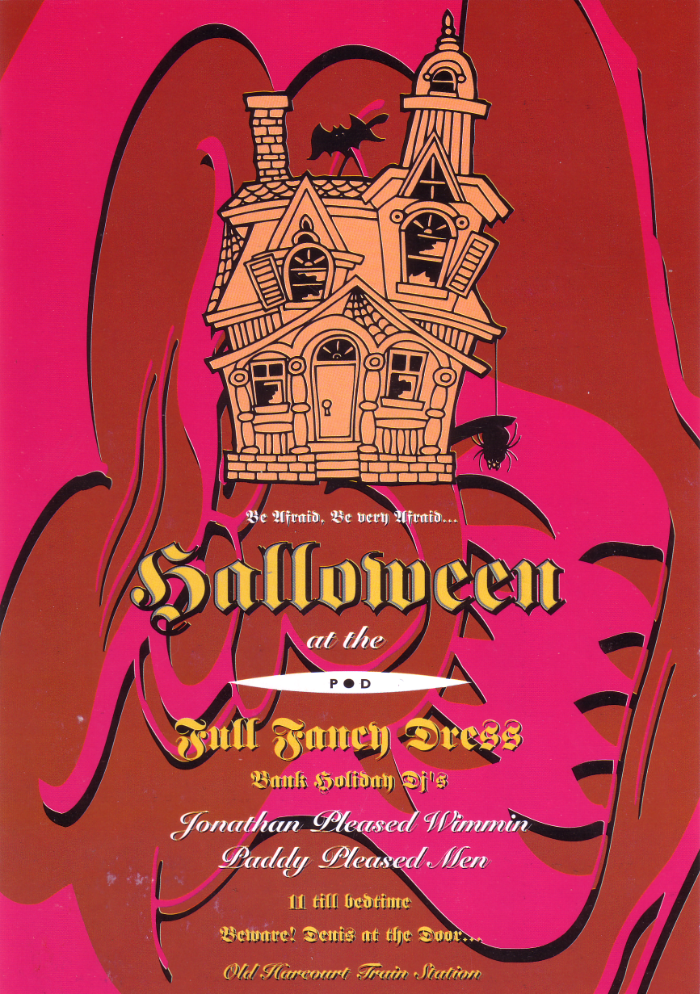
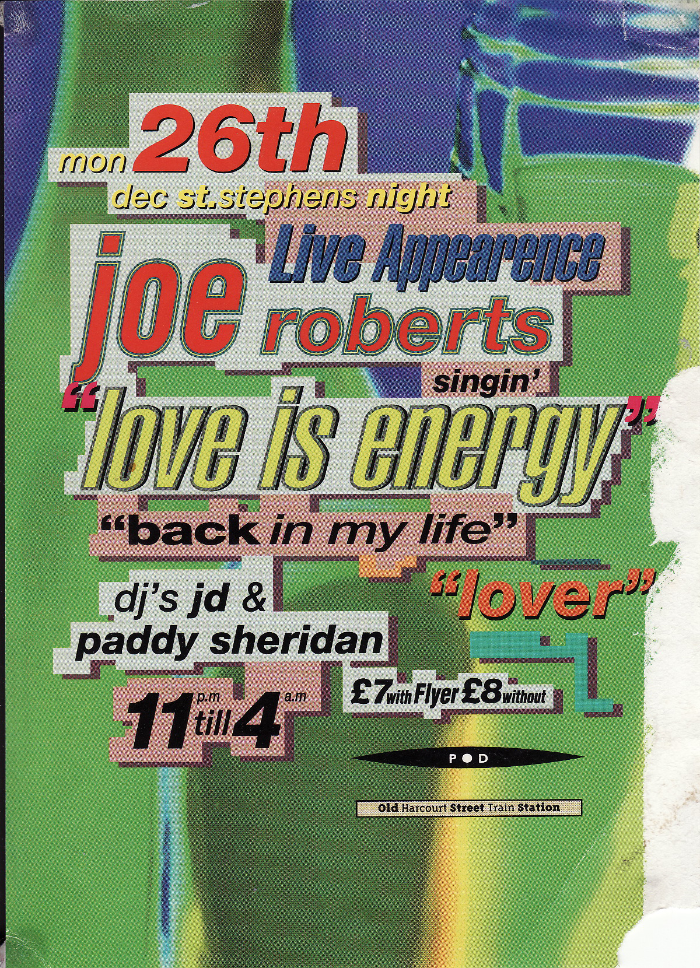
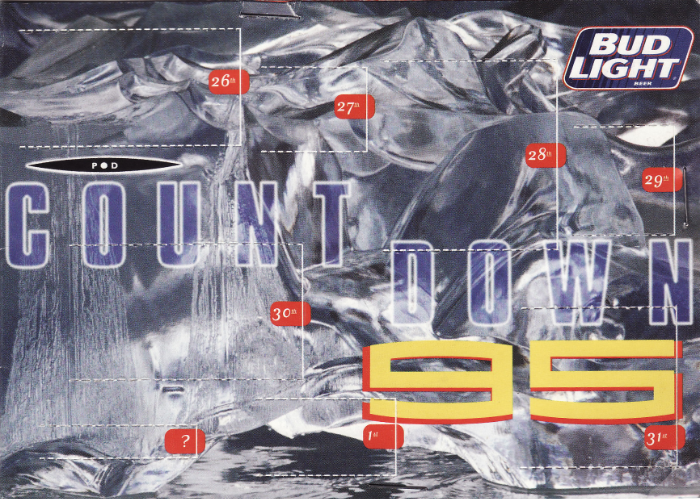
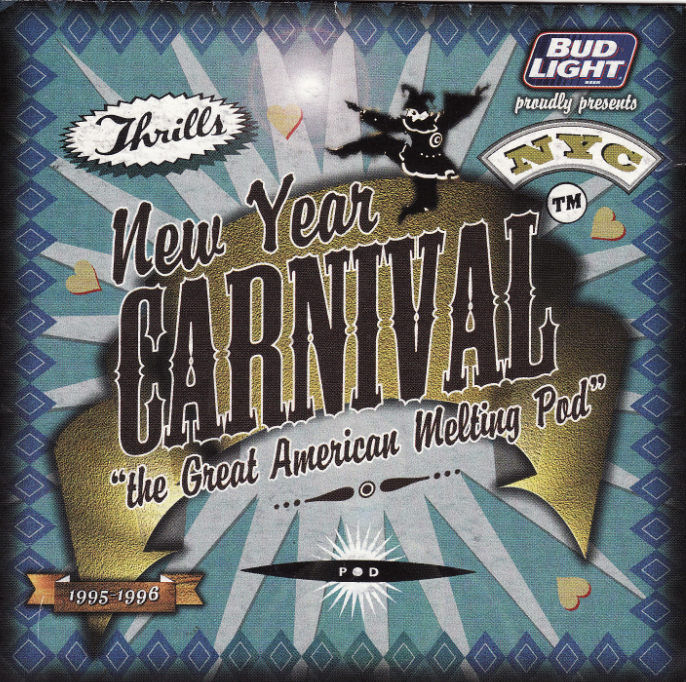
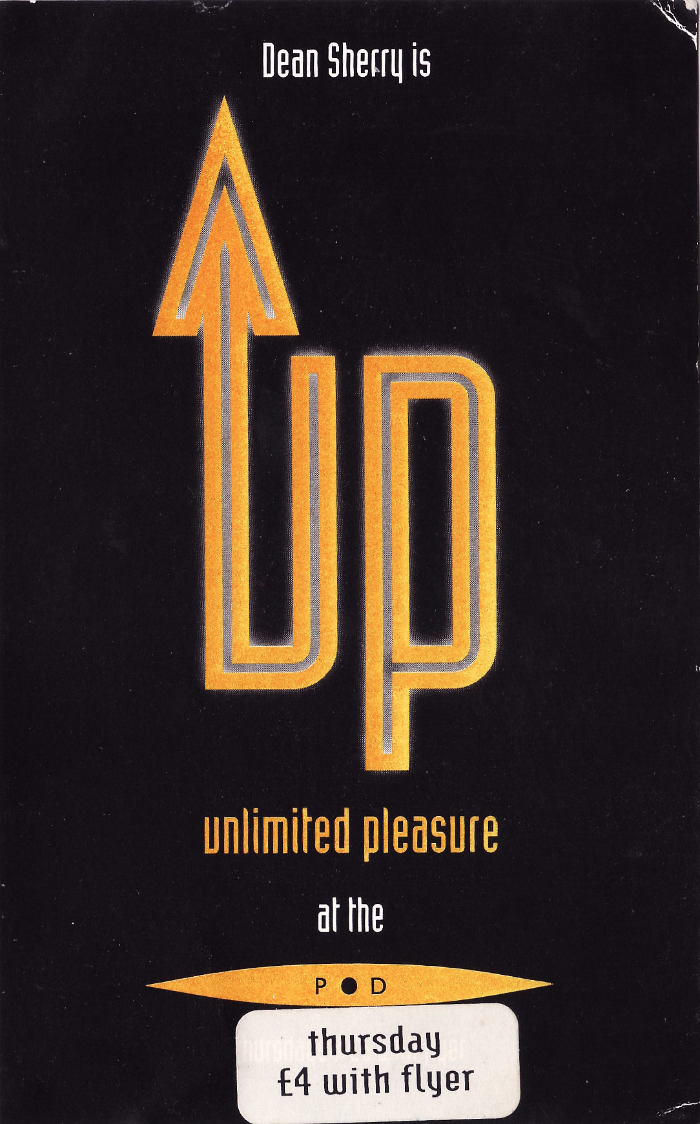
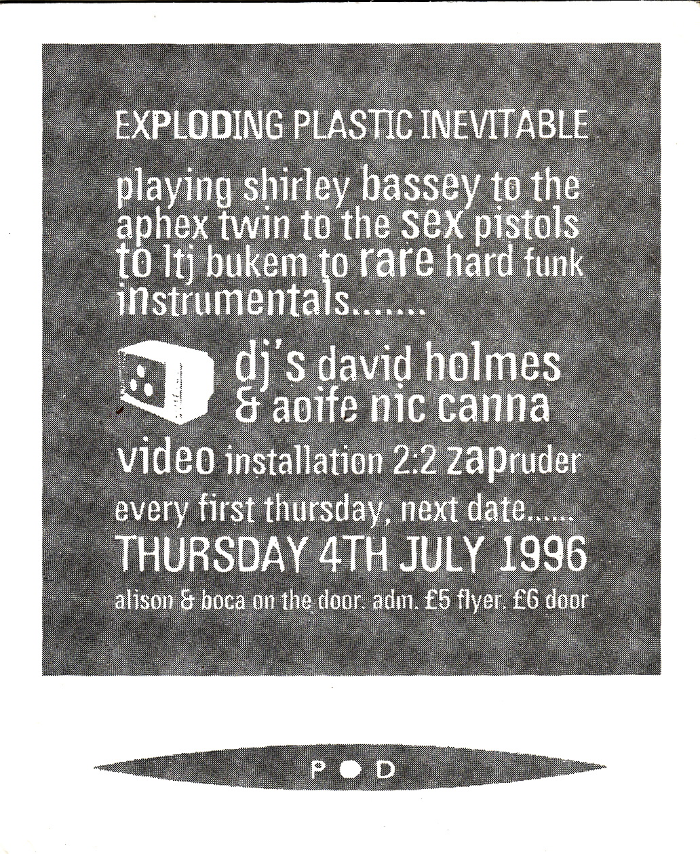
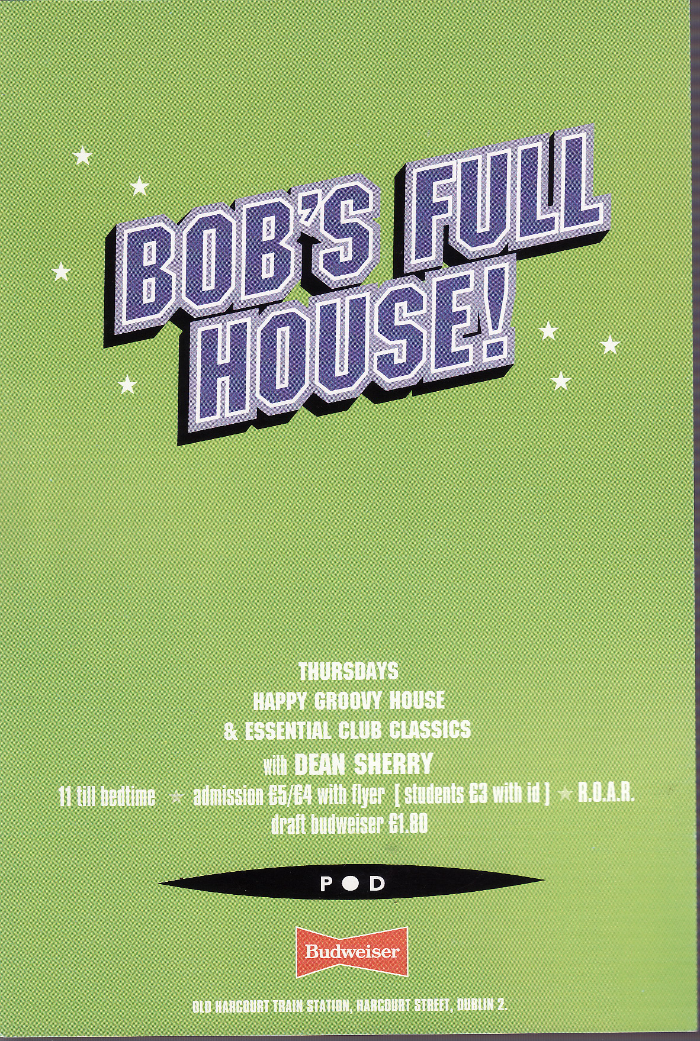

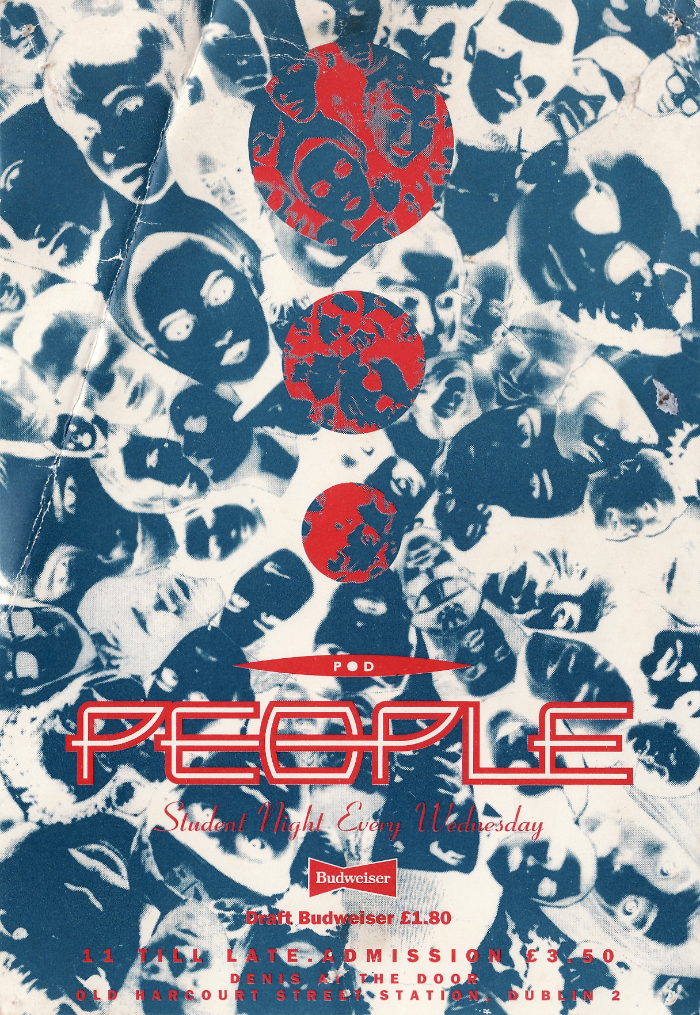
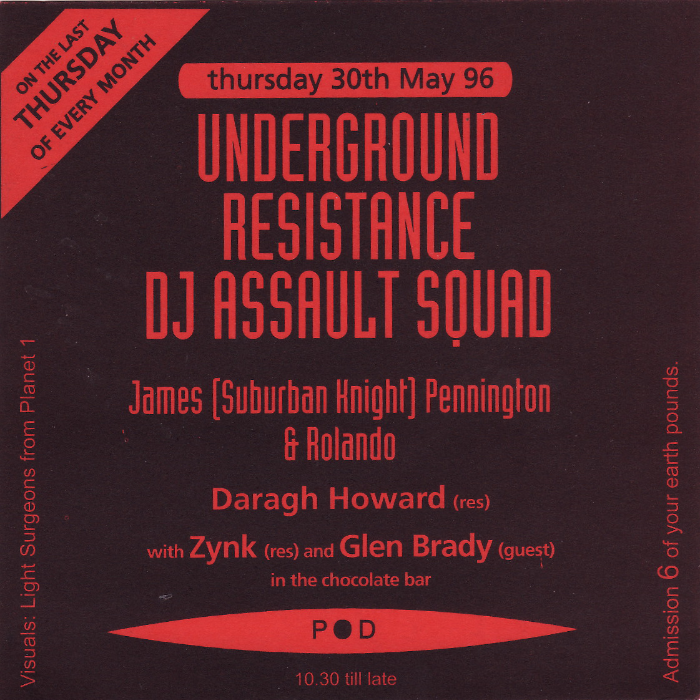
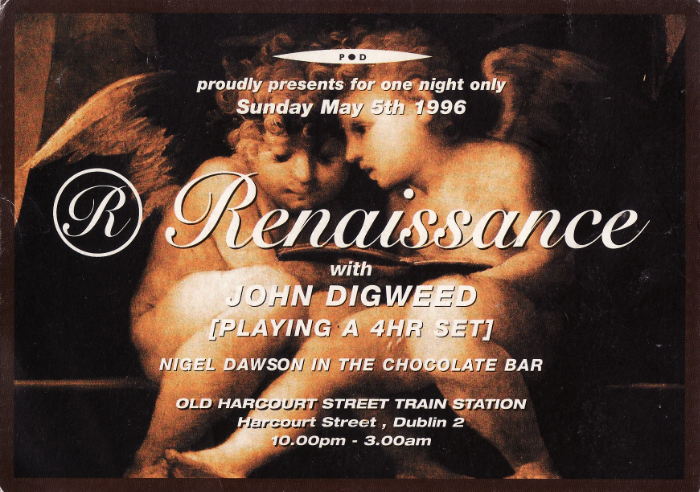
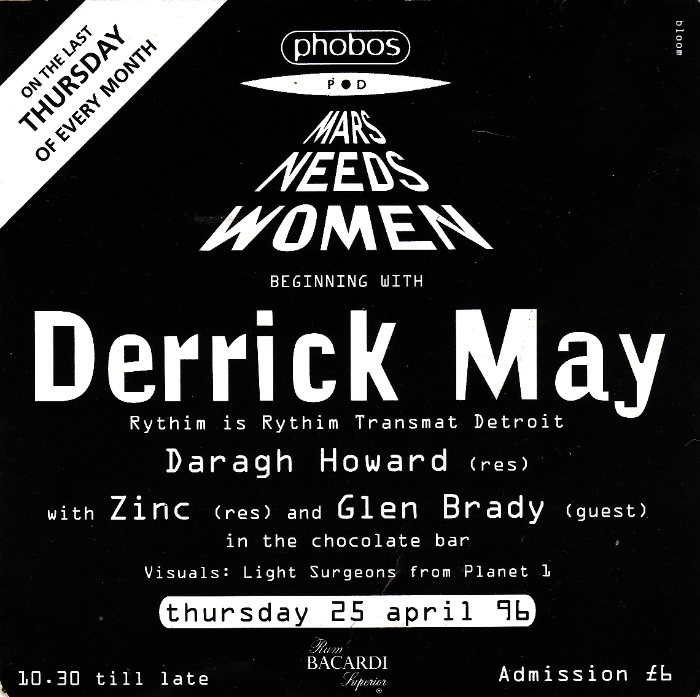
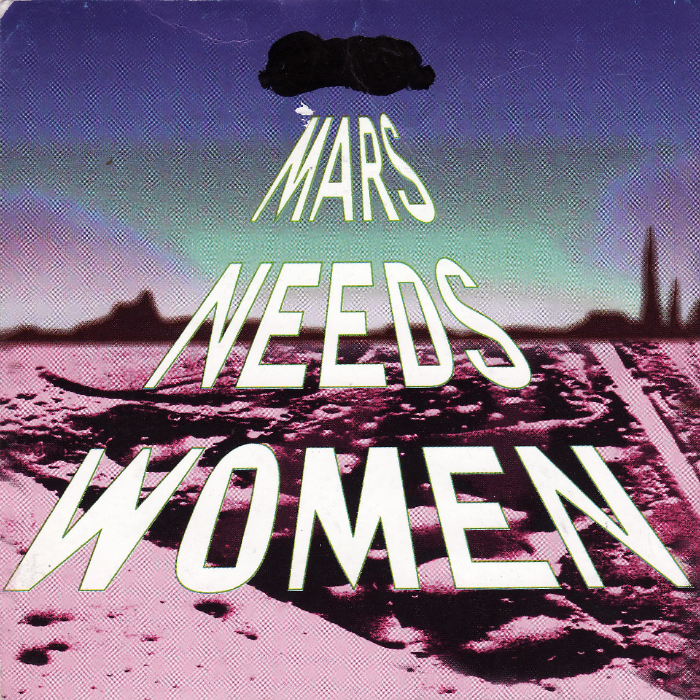
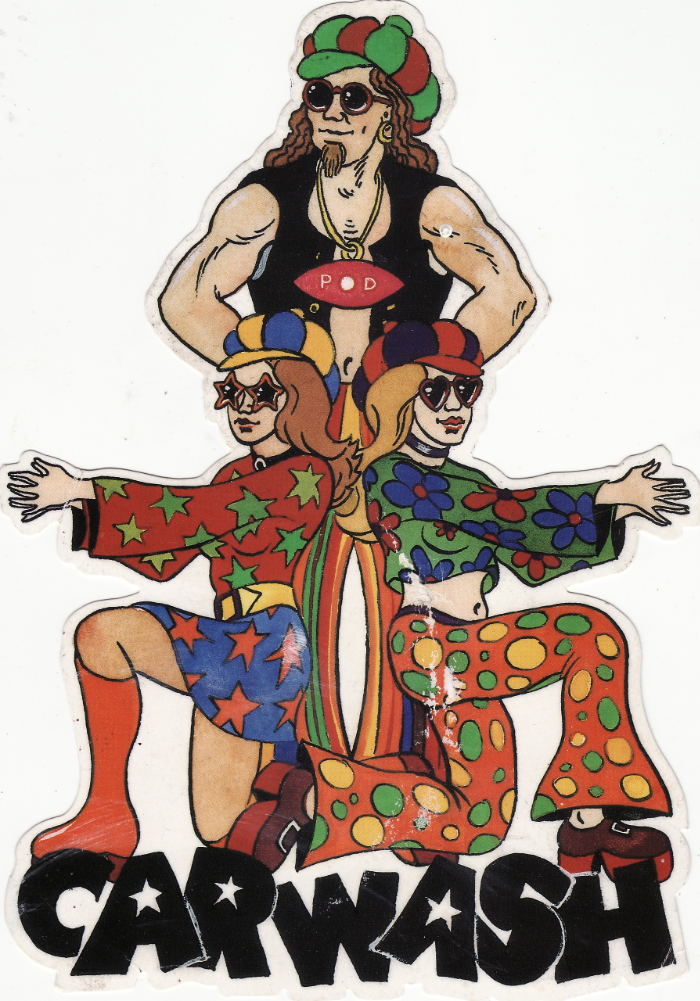
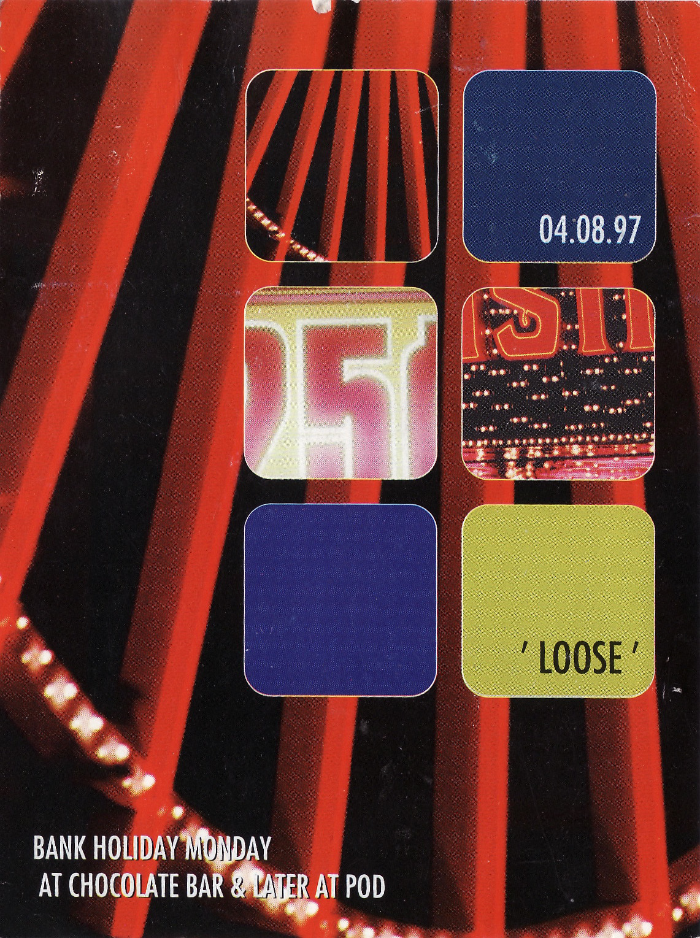
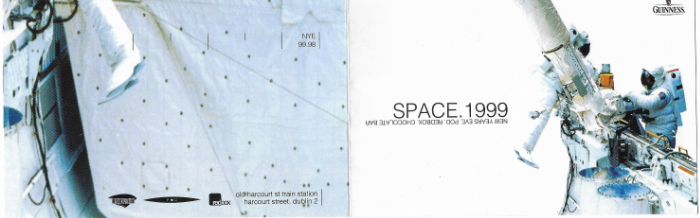
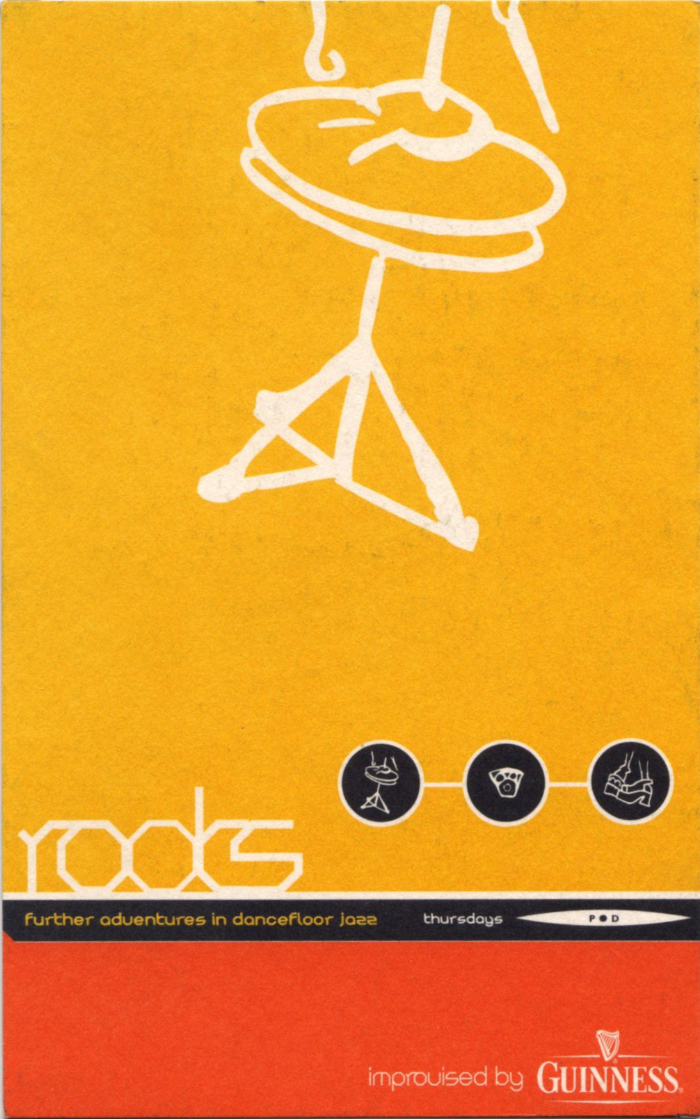
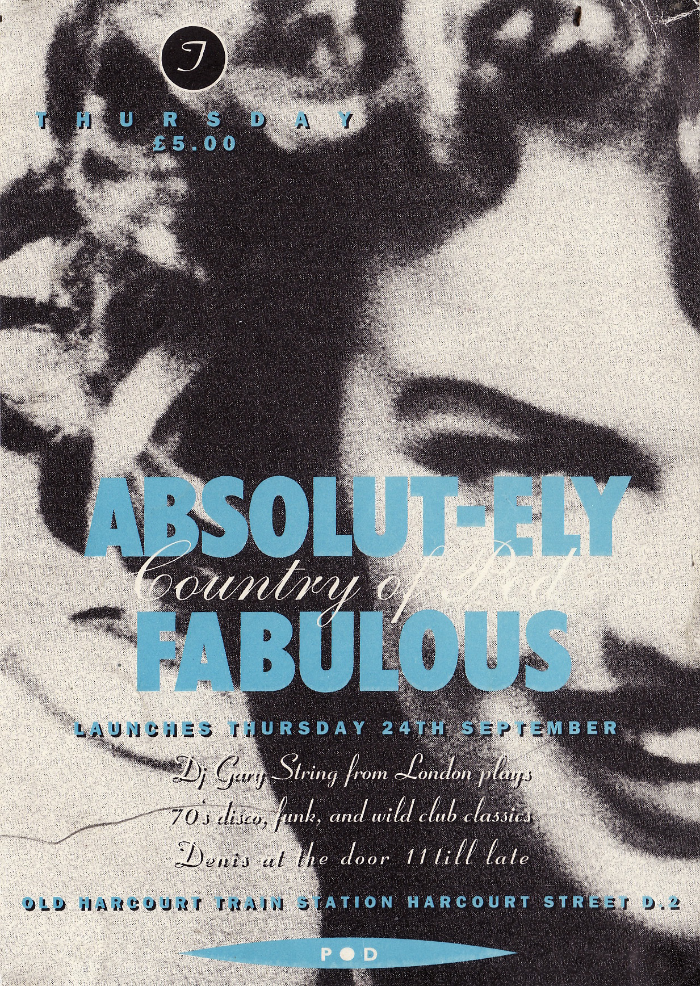
VIDEOS
The Pod, 1993 – taken from ‘The Best of BPM’
DJ SETS
Right click to open in a new tab
Jonathan Davis – The Pod, 10 December 1994
David Donohue – The Pod, Dublin, 27 May 2006
WORDS #1
[This article originally featured on 909originals.com]
“Jesus, this city is wide open for a fashionable club…” How John Reynolds created Dublin’s The Pod
Dublin’s The Pod nightclub, which opened its doors on 13 April 1993, brought a degree of professionalism to the Irish capital’s club scene – where other venues like Sides DC or McGonagles helped set the template, the Harcourt Street venue, opened by the then 26-year-old John Reynolds, sought to raise the bar, and compete with the best in Europe.
While it had its detractors over the years – not least due to the strict door policy, overseen by front-of-house man Denis O’Kelly – The Pod was among the venues that helped to establish Dublin as a night-time mecca for foreign tourists, which it has retained to this day, pandemic notwithstanding.
Longford native Reynolds, the nephew of the then-Taoiseach Albert Reynolds, had already established his name in London clubland – working for First Leisure Corporation, he managed the London Empire in Leicester Square before going on to manage Ministry of Sound. He also ran a number of parties at the Limelight Club in London, as well as the celebrated Kinky Gerlinky in the Equinox; which earned him mentions in trendy publications such as The Face and I-D.
A trip to Dublin in February 1992, during which he spent a night out with friends, would sow the seeds for what would eventually become The Pod, as he and his compatriots were refused entry from a number of nocturnal haunts.
“We were refused because we weren’t regulars, which was fair enough,” he told the Sunday Tribune in April 1994. “But we had Jeremy Healy with us, the DJ who plays at Jean Paul Gaultier’s fashion shows, and he was told that his type wasn’t welcome here – he was dressed in about two grand’s worth of designer leather gear from Destroy.
“Afterwards, when we were walking down Grafton Street, we said ‘Jesus, this city is wide open for a fashionable club!’”
With a £150,000 loan, Reynolds opened The Pod in two vaults under the derelict Harcourt Street Station and set to work establishing it as a go-to venue. With few locations of its stature, The Pod quickly made its way into the headlines, with its owner the toast of an emerging band of youthful entrepreneurs.
The mischievous ringmaster’s reputation ensured that he featured in the very first edition of dSide Magazine, published in late 1993.
Under the title Legends in their Lunchtime, Reynolds is described thus: “Though there are countless reasons why all and sundry beg admission to the POD, the two most blatant must be the men’s loos and their divine owner. Longford’s most exceptional export, John is a constination in his constellation. Kind to a fault and bright beyond belief, this man can surely walk on water.”
Within weeks of opening, the venue was the talk of the town. As The Irish Times gushed in November 1993, “The Pod has been irredeemably fashionable since first opening its doors last April. The Barcelona-inspired decor (designed by Scotland’s Ron McCullough), the location beneath the arches of Harcourt Street Station and the management of John Reynolds (nephew of the Taoiseach, although Albert Reynolds is hardly a byword for fashionability) have all helped enhance the club’s reputation, as has its exclusivity.
“Among those who have succeeded in crossing the threshold are U2, who held their post-Dublin concerts there, the ubiquitous Naomi Campbell, who even engaged in an outbreak of karaoke – perhaps by way of preparation for the album she is planning to record; and Dina Carroll and Oleta Adams, who both gave private concerts on the premises.”
For Reynolds, who was a near-ever present at the club in its formative years – “I’m usually here at 10 in the morning and I leave at four or five the following morning,” he told the Tribune – The Pod also presented an opportunity to prove his detractors wrong – ‘Dublin wasn’t ready for a venue like this’, he was told. Au contraire.
“When The Pod opened, the cynics said that if you don’t have a carpet in the place, then it won’t work, and they branded the music we were playing as rave,” he told the Evening Herald in April 1994. “That’s because they are so ignorant. […] I think we proved the cynics wrong, through sheer hard work and team effort.
“I always felt there was an opening for a club of The Pod’s style and music policy. We are a club for young, fashionable people. We have been pigeonholed, though. Sure, the club is very image-related, but that’s because there was no-one else doing that. And every club in Dublin taps into a different market. They all have their own policy.”
As to whether The Pod’s door policy was too strict, Reynolds refuted such suggestions. “It’s nonsense to say we are elitist,” he told the Herald. “Dennis, our front-of-house manager, could tell you stories about the guys who flash platinum gold cards, or show their BMW keys to get in. We don’t want louts who think that money does everything in here.”
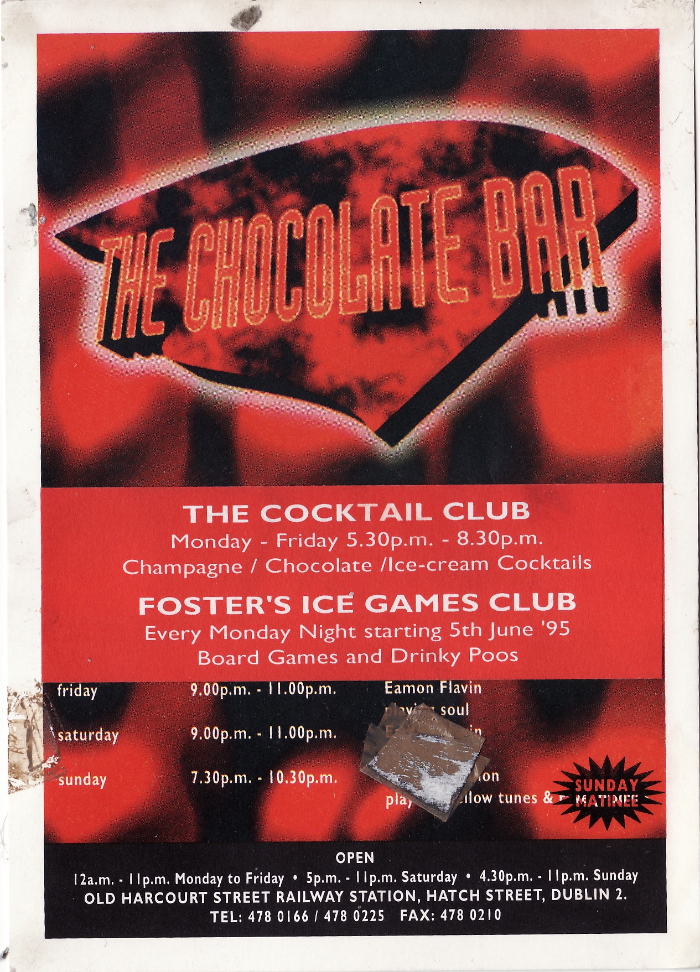
Reynolds would follow up The Pod’s success with the opening of the adjacent Chocolate Bar a year later, and complete the holy trinity in December 1996 with the opening of the RedBox, in the former train station building. He passed away in October 2018, at the age of just 53. RIP.
WORDS #2
[This article originally featured on 909originals.com]
“It was something that people hadn’t really seen before, but they were ready for it…” The making of Dublin’s The Pod
On 13 April 1993, The Pod opened its doors, ushering in a new era of sophistication for Dublin clubbing.
Located underneath the old Harcourt Street Railway Station in the heart of the Irish capital, the venue was dubbed the ‘most exciting thing to hit Harcourt Street since the 9.55 from Bray’ crashed through the station’s walls in 1900.
The club, and sister venues The Chocolate Bar and The RedBox that followed it, was the brainchild of Longford businessman John Reynolds, who, fresh from managing venues such as Equinox and Ministry of Sound in London and The It in Amsterdam, wanted to bring a heretofore unseen level of panache to Dublin’s clubbing scene.
The nephew of former Taoiseach Albert Reynolds, John opened The Pod while still in his mid 20s, kickstarting a career that would lead to venues such as Spy, The Market Bar and the Button Factory, as well as festivals like Forbidden Fruit, Garden Party and Electric Picnic, before his untimely death at the age of just 52.
909originals caught up with award-winning venue designer Ron McCulloch, the man who was tasked with turning John’s ‘grand vision’ into clubbing reality.
At the tail end of the 80s, UK clubbing was still its formative years – while Manchester’s The Hacienda was a massive success, venues such as Ministry and Sound and Cream were still a few years away. Seeking to create a clubbing mecca in Scotland, Ron McCulloch, the man behind Glasgow’s successful The Rock Garden, was part of the team behind a new club in the Scottish city, The Tunnel, which caught the eye of a young John Reynolds….
The Tunnel marked a step forward for contemporary clubbing. We spent a fortune on it, and it was just one of several clubs that I was designing, and running, at the time.
My first encounter with John was when he came up to me one night, saying “you don’t know who I am, but I’ve seen the stuff you do and I’d love you to help me open a club”.
He was right, I didn’t know who he was – he was just a youngster! I wasn’t able to take any new projects on, so I brushed him off, saying “I’d love to help you John but I’m too busy. It’s unrealistic.”
I think that was it – as soon as I said the word ‘unrealistic’, John was on a mission. He pursued me for about two months.
One day, this nice box arrived in the office, and it contained two tickets to Dublin and a begging letter urging me to come over – “you won’t regret it, you’re going to see something special!”
He didn’t mention anything about who he was, or his political connections, it was just typical Irish brazenness. Plus, the Internet wasn’t around at the time, so I couldn’t just look him up. I decided to accept the invitation.
He came and picked me up at the airport. As was John’s style, there was nothing like ‘the moment’, so we went straight to Harcourt Street, where the club was going to be. Over the course of a 20 minute car ride, he told me his vision – that it was this old train station and so forth – and then we arrived at this building with ramshackle fencing around it, and a little door that led to one of the chambers that used to be underneath the train station.
Because I was a club operator and a designer, I looked at it from two perspectives: one, could I make something out of this, does it have potential? And two, do I believe that this person I’m dealing with can bring their vision to life?
By the time that evening was over – we had gone to so many places and everywhere we went, John was treated like a celebrity – I was convinced.
Impressed with the space, McCulloch saw an obstacle right from the off – with the doorway leading straight onto the dancefloor, would-be punters could quite easily see into the venue, and potentially decide not to come in…
When we first visited the site, John was very keen to get my first impression. As I told him, because the club was on one level, you got the full picture as soon as you came in the door, which I didn’t think was a good idea. I thought that we should stick something at the entrance that took you up over the dancefloor and back down to the floor.
“I think you should stick a freestanding ‘pod’ there,” I told him.
“I like the pod,” he replied.
I took that to mean that he was on board with the design concept and we could discuss some of the other things, but he was dwelling on the idea.
“No, Ron, I like the name. The Pod,” he said.
So that was how the club got its name – on that very first day! The acronym, ‘Place of Dance’, came later.
I think as soon as John got his hands on me, there was no way I was going to say no to the project. He was a very persuasive guy, once he got you with the gift of the gab, he was a hard man to say no to.
Having designed clubs in New York and Barcelona, as well as countless UK cities, McCulloch set about bringing The Pod to life, overseeing the development of a venue that blended metal, loose fabrics, wood, copper, stone and Philippe Starck furniture, across around 5,000 square feet of floor space…
From day one, it was all about his vision. He had seen the work I had done on other projects, and trusted me to create something that people were going to relate to. It was a good job he was so persuasive, because the time frame he had given me was, well… extraordinary.
When you are putting a club together, generally half the time is spent trying to persuade somebody that ‘this is the way’ you need to do something. There are always missteps and missed opportunities. But John was pretty practical. I had the place drawn up on paper within ten days, but as I said to him, I wouldn’t have a clue about where I would get the appropriate consent and permissions.
“Leave that to me,” was his reply. It was then that I realised the political connections he had!
When the club was coming together, I remember flying in from Glasgow and the works were further behind than they should have been. Nothing was connected and nothing was working.
But John was so excited – “this is going to be here, and this is going to be here” – that I never doubted we would get things finished on time. Once we had set the date for the opening night, there was no way we were going to miss it.
What John liked about other venues I had done, was that they often had a fairly traditional sort of backdrop, with touches of luxury. Combining that rustic feel with contemporary touches is easy to conceptualise now, but back then, nightclubs were full of flashy brass and chrome and plastic. John wanted a place that on the one hand looked casual and relaxed, but at the same time had elements of luxury as well. That incorporated the sound system, the drinks you dispense at the bar, the whole ambience of the place.
The Pod opened its doors on Tuesday 13 April 1993, welcoming the great and good of Ireland’s social scene. Within a few months, it was the ‘go-to’ venue in the capital.
As is normal with these sort of things, by the time the opening night comes around, you hope to have it as close to finished as you can, and we were probably around 80% of the way there. There were a few things that took us another month or so to get sorted.
But on the actual night itself opening night, everybody was in the right mood, everybody was really intrigued to see what John had done.
It was impressive how he pulled it together, even though I could see all the bits that were hanging out and were not quite finished. But the bar worked, and the sound system worked, and the toilets worked, and it was just an amazing night.
It was something that people hadn’t really seen before… but they were ready for it.
With The Pod up and running, John quickly sought to double down on the venue’s success, and looked to develop other parts of the Harcourt Street complex. This led to the entrepreneur once again reaching out to Ron, who was summoned to Dublin to examine the space that would soon become The Chocolate Bar…
By this time, John and I knew each other pretty well. John was pretty happy with how the Pod had turned out; there were a couple of small alterations here and there, but in essence it remained in its same form for a long time.
Around a year after it opened, I was in Dublin to see how things were going, and John had a couple of things he said he wanted to discuss with me. More as a throwaway comment, he said “let’s go outside”, and we did, and I thought he was going to tell me about some changes he wanted to make to the facade of the venue.
But then we walked around the corner, and he points to this big concrete wall, and asks “What do you think of that? I’m thinking of putting a bar inside it”.
So we go back into the venue, and he leads me to this room, and it’s full of rubble, but he’s marked it all out on the floor.
“I want to put the bar there,” he says, pointing to the side wall. “I want to get a big digger and dig it all out.”
Now, this is the tail end of Harcourt Street station, and it’s been backfilled. It was clear he needed a structural engineer before he did anything else.
“Do you have any idea what’s in there?” I asked.
“No, but I can take it out,” he said.
So I head back to Glasgow, to try to make some sense of his plans and to work out what’s underneath all that rubble, and then one day, a Thursday I think, I get a phone call from John. I can hardly hear him, there’s so much background noise.
“Ron, are you there?,” he says. “Can you hear it? That’s the digger!”
I hadn’t really done anything on the project yet, but he told me to hurry up, that he would have the whole place dug out in a week and a half.
So I agreed to come back over in three weeks to take a look at it.
While The Pod boasted artistic flourishes, The Chocolate Bar oozed style, from the massive ornate frame and sculpture behind the bar, to furniture from Terence Conran and Alfredo Aribas. One of the venue’s main talking points was the bathroom, which boasted Philippe Starck washbasins and a flowing river as the urinal….
It was a more ‘organic’ looking venue. I had done a restaurant called Cul-De-Sac, which John had seen, and it had artistic elements and lots of ironwork – a very earthy approach – so that’s what we were going for.
There were some elements I really loved – the staircase up to the mezzanine level was made by Andy Scott, a Scottish sculptor I had worked with before. There was the sweeping bar, with the applied plaster finish on it. And of course, the bathrooms, where you had to walk over some stepping stones to get to the toilet!
It was a really nice little bar, but like the Pod, it all came together at breakneck speed. As with the previous project, the main aim was to try to keep ahead of John.
The name came from the fact that John was always eating chocolate. We sat down one day, and he had his chocolate bar in hand, and a can of Diet Coke, and we were trying to come up with a name.
“You can call it anything you want,” I said, pointing to the bar in his hand.
“The Chocolate Bar? You’re kidding,” he replied.
But it was as good as any of the other names we had in mind. So we called it the Chocolate Bar.
I remember on the opening night, John was welcoming everyone in personally at the door, and then out of the corner of his eye, he saw some tall, flashy guy walking over the furniture. The place was packed, so this guy decided to take a short cut, and steps over one of the settees.
John was livid, and darted straight over to him. “You can’t do that in here! You’re out!” He threw him right out the door.
I pulled John aside, and I said to him, “Look, this isn’t your house, this is a venue you are running. People are going to be doing that night after night.”
“No,” he said. “They’re not going to that here.”
He was so proud of it.
WORDS #3
Johnny Moy
In conversation with 909originals.com
“The likes of The Pod and The Kitchen completely commercialised [Dublin clubbing]. They normalised it. The cops didn’t understand it before that, along with the authorities – they were terrified, ‘what the f**k is going on here’, you know?
“But the likes of The Pod had a very much ‘well to do’ crowd, and you had Denis on the door, kind of like Studio 54. “You can come in, you can’t come in”. It was this exclusive kind of thing, and John [Reynolds] wanted it like that. And that’s fine. We were more inclusive than exclusive, and The Kitchen was kind of in the middle for both of us.
“I think definitely when some of the bigger clubs opened – The Kitchen and The Pod, and the Temple of Sound kind of paved the way for them – they sort of normalised clubbing in society. And that’s when you could have called it overground.”
WORDS #4
Mr Spring
From Notes on Rave in Dublin documentary
“On the first night of The Pod, when it opened, Sound Crowd were meant to play. We were going to DJ. It was the first night of this new club and had been hyped in all the papers. We handed out tickets and invitations to everybody in the Olympic the week before and the week before that. We hyped it up on the radio and we had a vibe going.
“The question they asked everybody on the door of The Pod on the first night was, ‘so you’re here for the dance, yeah?’, or ‘so you’re a raver, yeah? We don’t like ravers.’ They just refused people and sent everyone packing. And when we got on stage, the place was half full, but it was people in suits.”
[Main photo by Lee Gallagher]
SUPPORT ANALOG RHYTHMS: If you like what you see, why not pledge your support below to keep ANALOG RHYTHMS up and running. You can make a one-time donation or a monthly or yearly contribution. 🙂
Make a one-time donation
Make a monthly donation
Make a yearly donation
Choose an amount
Or enter a custom amount
Your contribution is appreciated.
Your contribution is appreciated.
Your contribution is appreciated.
DonateDonate monthlyDonate yearly ANALOG RHYTHMS – A CELEBRATION OF DUBLIN CLUB CULTURE
One thought on “The Pod”