
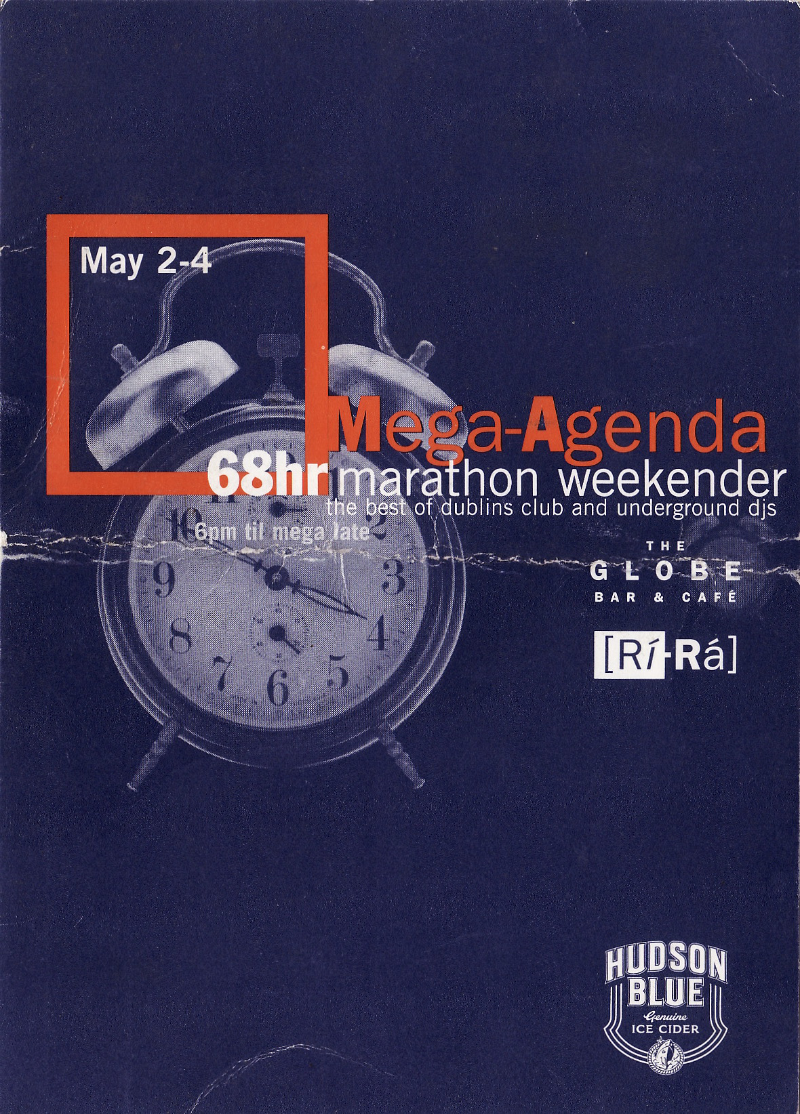
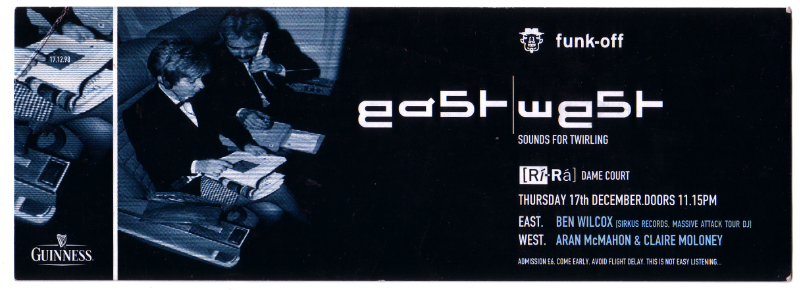
FLYERS











PHOTOS
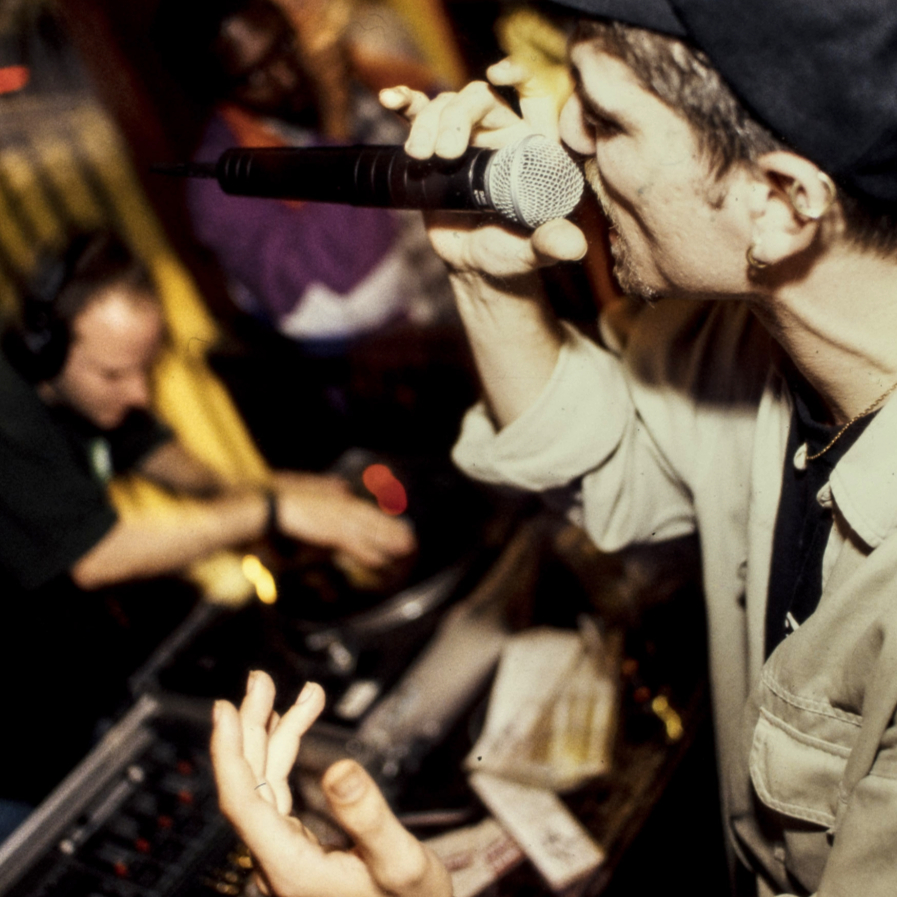
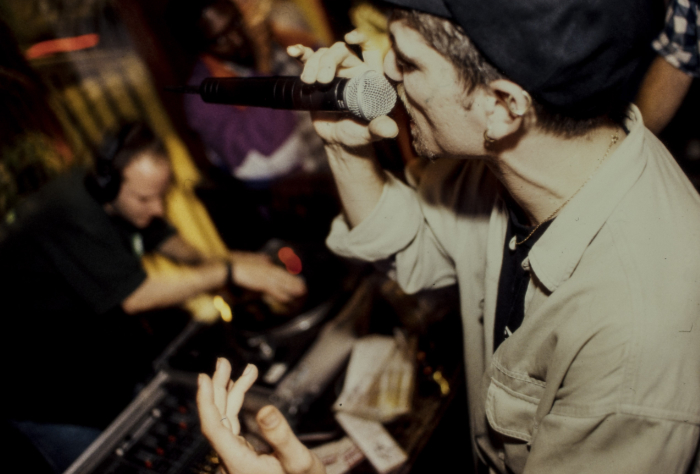
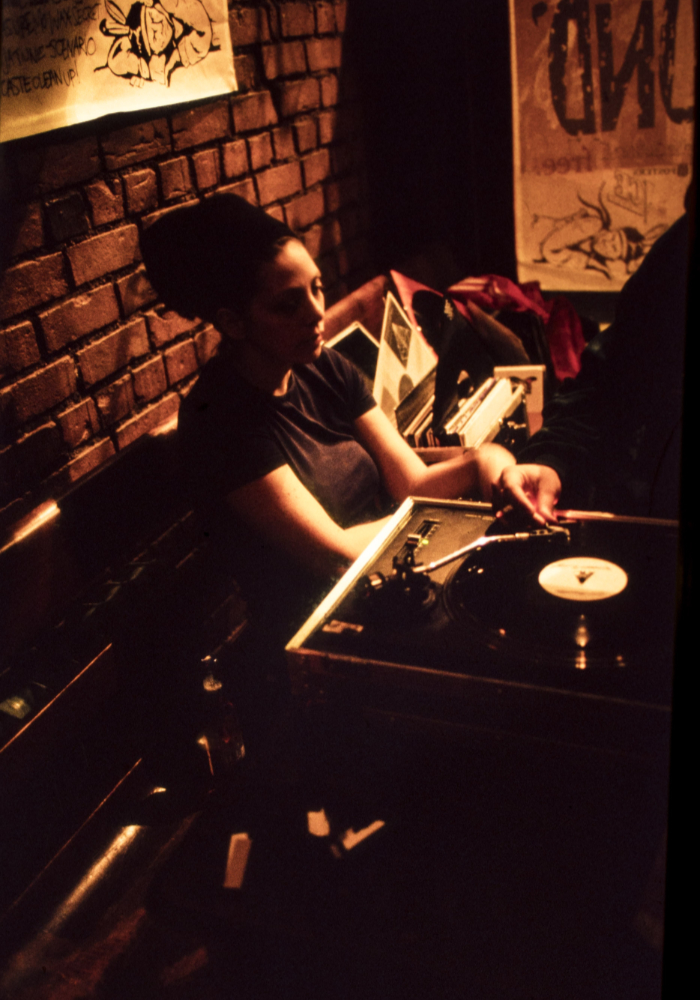
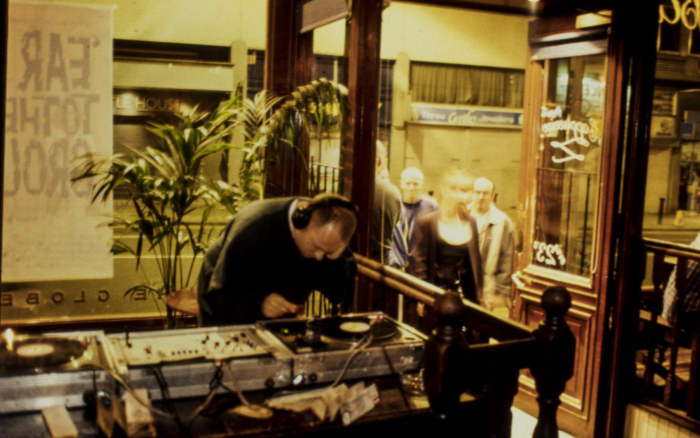
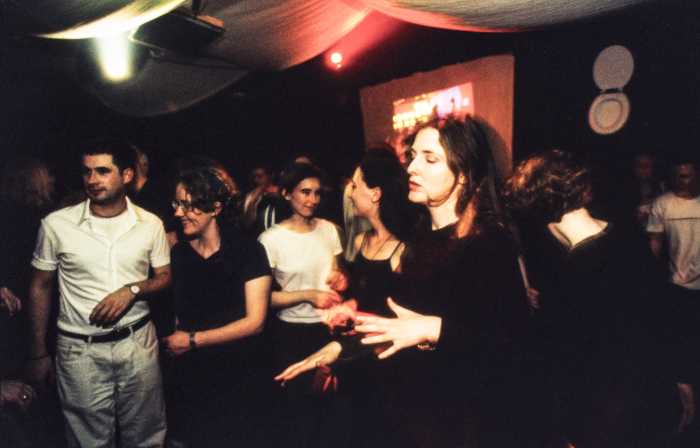
Photos by Paul McCarthy


WORDS #1
Brian Nolan
In conversation with 909originals about Strictly Handbag, the longest-running Monday night club in Dublin, and the iconic ‘handbag’ flyers developed by himself alongside Strictly Fish maestro Martin Thomas.
“At the end of the 80s, early 90s people were at a loose end in Dublin. Nothing was happening. Slowly the club scene emerged, and along with it came a lot of really creative people, musicians, DJ’s – and then the associated promotion of that became something that was interesting and quite creative.
“Everyone was doing it just for the love of it. There was no real commercial side to it, until it started picking up and becoming a huge, full time business for a lot of people over a period of time. But the early stages of it were just great fun. Apart from the music, there was the social side of it – people like Martin Thomas, people like Eoin [Foyle] and Jay [Bourke] at Ri-Rá, and the guys who were running Velure and Lost in Music. There was a really nice mix of personalities to all those clubs.
“That was the part that attracted me. I wasn’t into taking it too seriously, and certainly when I worked with Martin in Strictly Fish or Strictly Handbag, and then subsequently the Ultra Lounge, it was all just based on people enjoying a night out. There was no real pretension about it, and that kind of appealed to me.
“There was that spirit of ‘doing something by yourself’. You kind of see it reflected in various times, including now, when there are groups of people at a loose end that just get together and do something just for the hell of it, not necessarily for any other reason. There was was very much that kind of feeling at the time, which made it much more satisfying and much more enjoyable.
“The great thing about Martin was that he was sort of outside the normal loop of, you know, ‘I’m running a commercial club, and I need to be cool’. That wasn’t him. He just wanted people to enjoy themselves.
“Maybe he was a little bit more strategic than we thought – he particularly targeted his club nights at people who were working in clubs. He became kind of the club for people who were associated with the business, and that’s why he put on nights on Sundays and Mondays, when these people would be out and about.
“I think his own perspective lent itself to something that was just a bit more fun, a bit more creative. He was very generous with his time and energy when it came to design. He wanted things to be ‘throwaway’ – his own father was a fancy goods salesman, and sold a lot of what you might call ‘plastic tat’ in towns in North Dublin and Drogheda.
“So, he had a huge appreciation for the little throwaway things that people love to keep. He put flyers in that category, and always wanted to push people to do something a bit different. He was always interested in making people smile. I think that was part of his personality.”
WORDS #2
She dances with penguins… 909originals chats to David Begley about the creation of some of Dublin’s most memorable club flyers
[This article was originally published on 909originals.com]
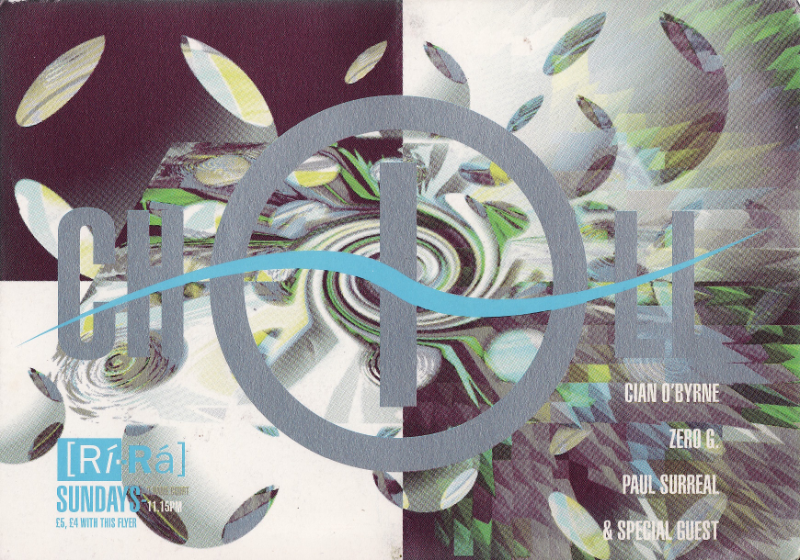
Speaking to the Evening Herald in September 1996, the late Martin Thomas of Strictly Fish described the nightclub flyers of the time as “disposable art” – fragments of ephemera that in many cases had little use beyond advertising an upcoming event.
A handful of designers – celebrated in the recent book Throw Away – including Brian Nolan, Aiden Grennelle, Pete Reddy, Peter Maybury and others – sought to challenge that perception, creating flyers which were both practical and aesthetically appealing, and in many cases (particularly in the case of Nolan’s inspired ‘Strictly Handbag’ fold outs) collectors’ items.
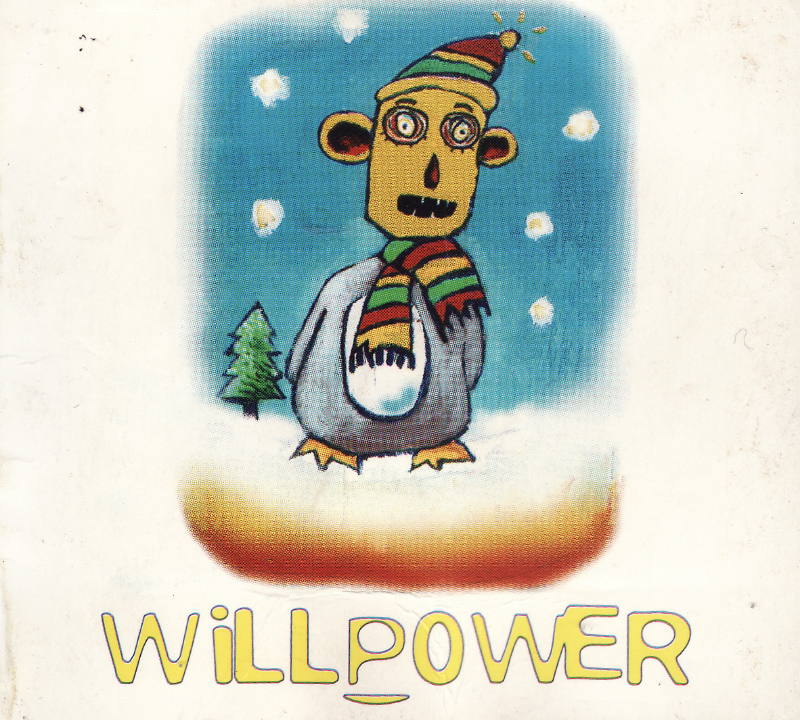
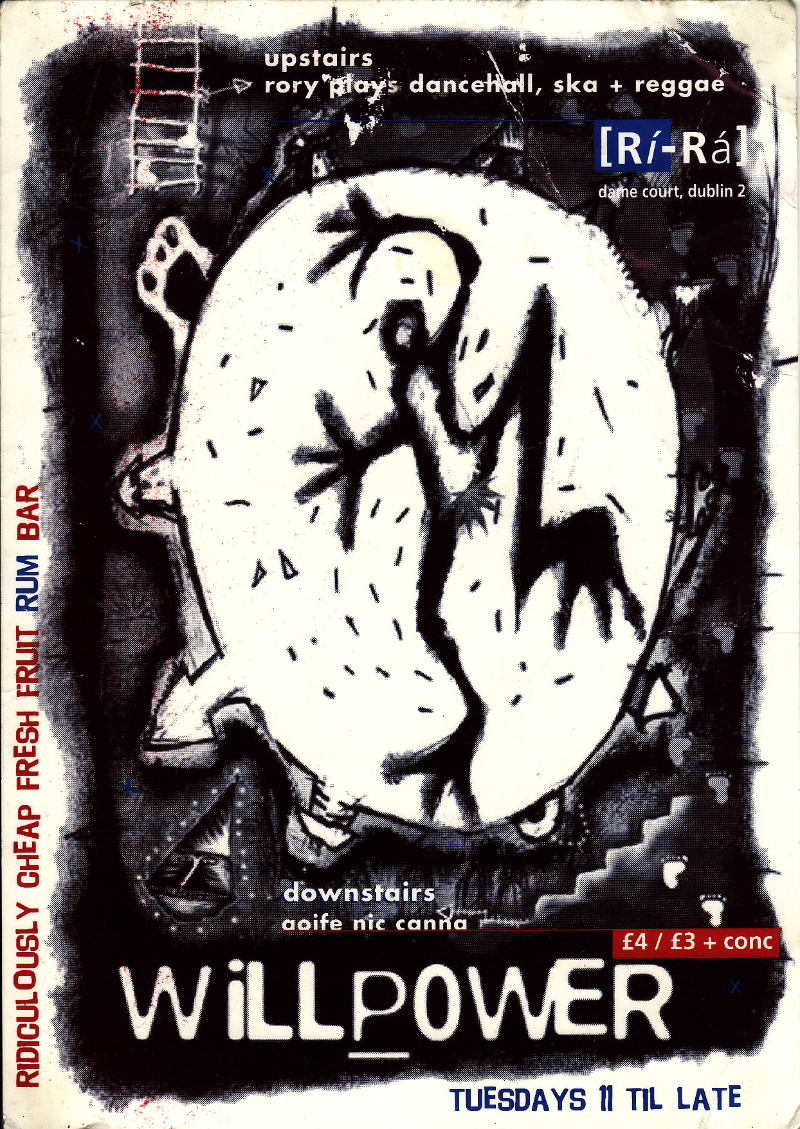
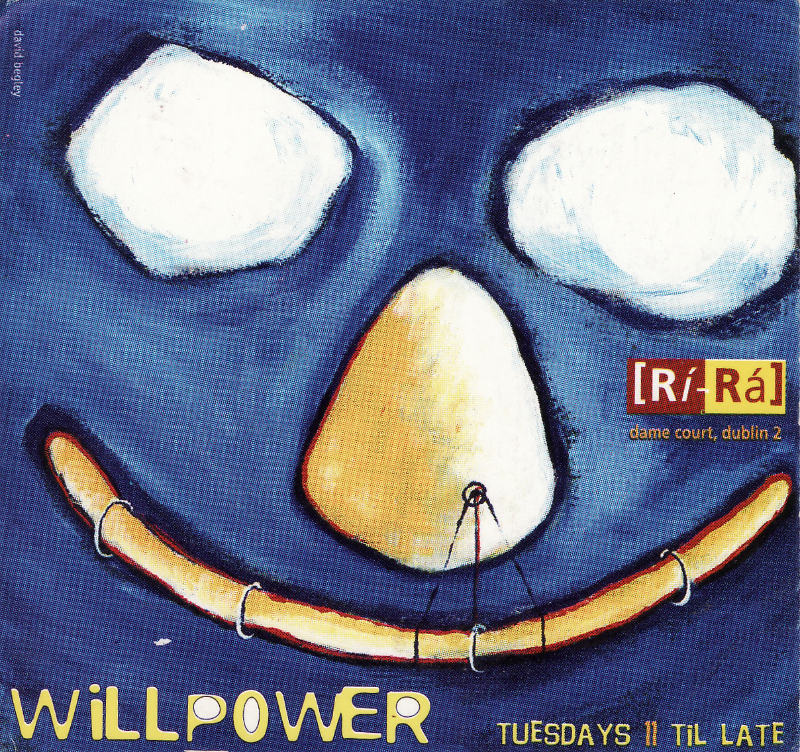
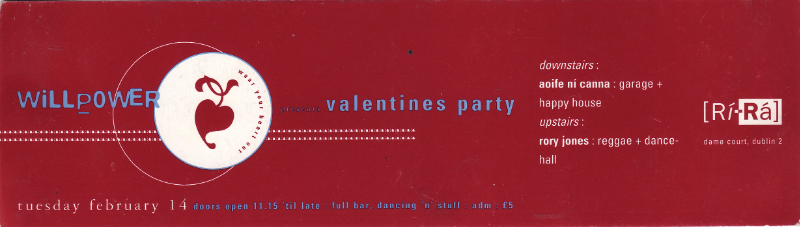
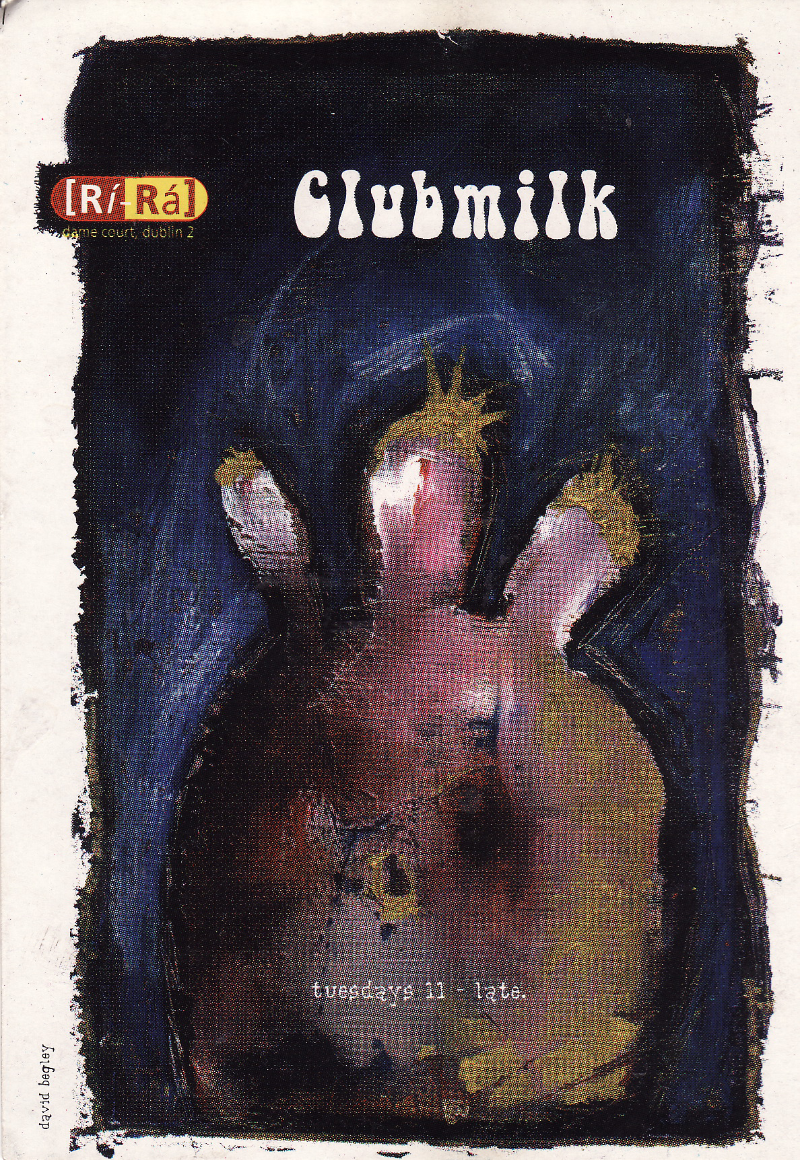
One of the stand-out flyer designers of the mid-90s was David Begley, now an accomplished artist, who while in his early 20s painted a series of polychromatic pieces for Willpower, a night held at Dublin’s iconic Ri-Rá venue, which along with The Globe upstairs helped “deliver sounds for groovers of every musical persuasion,” as a 1993 newspaper article put it.
With a nod to the likes of Bosch and Dali, and featuring a kaleidoscopic cast of characters – including in many cases, penguins – Begley’s pieces were among the most imaginative in the short history of the club flyer, and marked a first step in his now 30-year art career (not to mention his time with indie band Bionic).
909originals caught up with Begley, and had a chance to look through his archive – scroll down to view some of his standout pieces.
Hi David, thanks for talking to us. Let’s rewind to the mid 90s. You were in your early 20s, not long out of NCAD. Was clubbing and nightlife a big part of your world back then?
I was 23 and was living in my first flat. I enjoyed going to Rí-Rá once a week. I was in a guitar band at the time and was more interested in gigging and going to gigs as opposed to clubbing.
How did you come to use your art on club flyers?
I had illustrations published in several magazines at the time and was creating artworks for bands. A friend, Sinéad Keane, introduced me to promoter David Spencer of Willpower. I met with him and Rory Jones. Rory was really passionate about reggae, we discussed ideas, and he invited me to come to Willpower.
Upstairs was chilled, and downstairs frenetic. You had people, myself included, going downstairs and really going for it and then coming upstairs, having a pint, chilling out.
There was this sort of primal nature about clubbing – when you dance, you might be among complete strangers, and you let yourself go. You might engage with someone, have the craic, and then you might never see them again. There are these unspoken rules on the dancefloor… and then you go upstairs and be civil again.
The flow of people moving between floors, the cycle of it – dance-chill-dance – reminded me of a child’s wind up toy: penguins climb a ladder, slide down a slide, climb the ladder again and so on in perpetual motion. Imagining clubbers as penguins was my starting point for the first series of Willpower flyers.
At the time, I was very much painting in primary colours, so there was lots of yellow, blue, as well as red and green, the reggae colours. It was all very thematic. I didn’t get paid much but it didn’t bother me, because I was 23 and I was really enjoying doing them.

To what degree did this help you get established as an artist?
At this early stage of my painting, transitioning from illustration to fine art painting, looking back now I see it really helped. The motif of penguins as clubbers became central to paintings made in 1996, and a song written with Bionic in late ’95, ‘She dances with penguins’.
The fact that 3,000 postcard flyers were distributed around the city every week gave me an audience. Willpower was busy, bringing in big crowds and print once ran to 20,000 flyers. I used go to parties and see them on people’s fridges.
In a small circle in Dublin people knew my work and enjoyed it, and the flyers led to other work. At the time I worked constantly in notebooks, scribbled ideas, made sketches for compositions. This (standard) practice as carried on into my painting for a few years after.
Other clubs got in touch to see if I could do flyers for them – and I was happy to do them. But the painting aspect, that’s something I reserved for Willpower, because I had sort of ‘painted myself into a corner’; it didn’t feel right to use that method for another club.

Your first exhibition was in 1996 at the Ormond Multi Media Centre – was this before or after you appeared on club flyers?
After. Some of the work referenced club culture – the ‘club’ was represented as a circus. By 1996, I was working in oils and oil glazes and working on a large scale. The paintings were influenced by Renaissance, mannerist and Baroque narrative painting – designing compositions from left to right, using predellas, high colouration and glazing.
I had moved on, but people would still come up to me and say ‘oh, I know your work!’, and they would be talking about the flyers.
Did the artwork that you produced for club flyers influence your future direction as an artist?
It led to a large figurative mural commission in the Irish Museum of Music in 1998. I left Dublin soon after this for rural Wexford and the themes of my work shifted from club culture to the land, initially, and evolved from there.
Producing those artworks and enjoying the freedom to do so, as well as the exposure they brought was encouraging and inspiring at that time. In the time I painted them, from 1995 to 1997/98, they developed and the work became looser, more playful. Since that time I have worked through many mediums – drawing, print, film, sound, writing and charcoal animation. I plan to return to painting soon.
SUPPORT ANALOG RHYTHMS: If you like what you see, why not pledge your support below to keep ANALOG RHYTHMS up and running. You can make a one-time donation or a monthly or yearly contribution. 🙂
Make a one-time donation
Make a monthly donation
Make a yearly donation
Choose an amount
Or enter a custom amount
Your contribution is appreciated.
Your contribution is appreciated.
Your contribution is appreciated.
DonateDonate monthlyDonate yearly ANALOG RHYTHMS – A CELEBRATION OF DUBLIN CLUB CULTURE
One thought on “Ri-Rá”